This year, the International Day of Persons with Disabilities invites us to “foster disability-inclusive societies for advancing social progress.” For us, women with disabilities, this ambition is neither a slogan nor a distant horizon: it is a vital necessity. And above all, it is a collective act of voice.
Because to speak is to exist. To claim a place in a world that has too often pushed us to the margins. To affirm that disability is not a deficiency, but a human dimension. To insist that leadership is an act of dignity, the act of standing up, even when everything has been designed to keep us on the ground.
Dignity as a Driver of Leadership
More than 1.3 billion people live with disabilities worldwide, including over 600 million women. Yet fewer than 1% hold decision-making or leadership positions. This systemic exclusion is not only an injustice, it represents an immense loss of collective intelligence.
In a world facing overlapping social, climate, economic and political crises, our societies need leaders who are grounded in reality, capable of holding vision and resilience together.
This leadership is one we embody.
To be a woman with a disability is to stand at the crossroads of multiple vulnerabilities: intersecting discrimination, persistent stereotypes, exclusion from employment, absence from governance spaces.
According to UN Women, we are twice as likely to be unemployed and three times more likely to live in extreme poverty. And yet, we carry a form of leadership forged in adversity, shaped by ingenuity, creativity and endurance. As Armelle Nogning (Cameroon) expresses it: “Dignity fuels my leadership; it is the confidence to raise my voice and the resilience to shape change. Through leading, I have learned to recognize my own strength and to open pathways for others to rise in theirs.” Marie-Rose Kéré (Burkina Faso) puts it differently: “Our leadership was born from survival, but today it is expressed through ambition.”
Women with disabilities have never lacked ability. The world has lacked imagination.
Building Truly Inclusive Societies: Proof Through Action
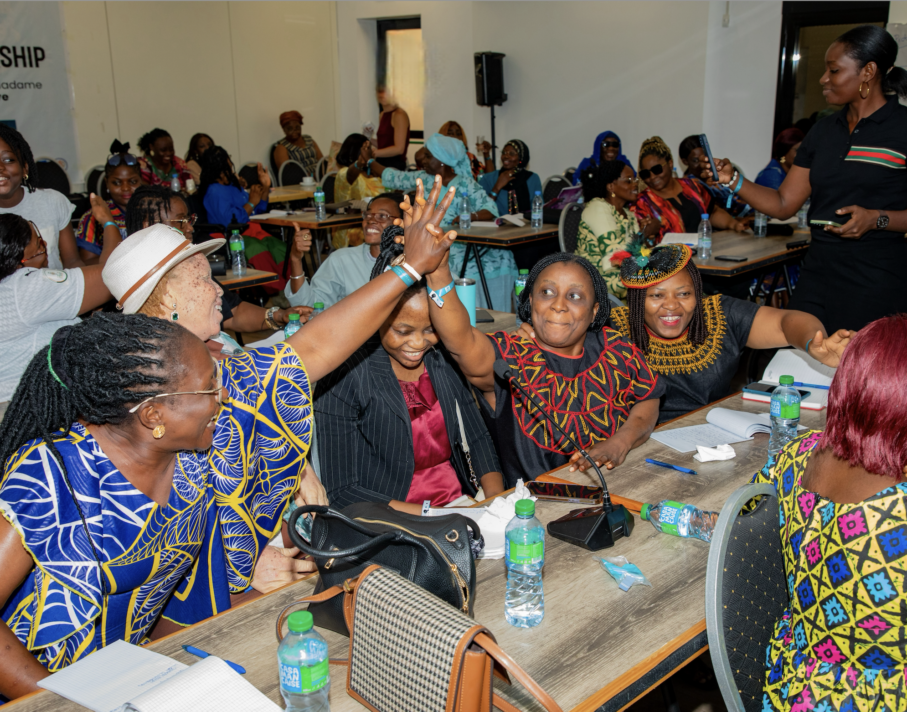
The AHADI Leadership movement began in France in October 2024 with 20 women with disabilities, supported by the Malakoff Humanis Handicap Foundation. In September, in Dakar, in partnership with the Government of Senegal, Plan International Senegal and the Foundation for a Just Society, we organized the first Pan-African seminar on the leadership of women with disabilities.
For one week, 50 women leaders from 11 African countries co-designed concrete strategies around: inclusive governance, economic empowerment, political participation. As Fonda Violet Ache (Cameroon) reminds us: “When women with disabilities are educated, they have the right to equal employment opportunities. Make your environment inclusive so they can access the workplace and be fully integrated with ease.”
This was not a symbolic event. It was a declaration. As Fatou, a Senegalese participant, said: “We were taught to ask for our place. In Dakar, we learned to create it.” And Grâce Mpondo (France) adds:
“Today, we are not only raising our voices for inclusion, we are extending our hands to break barriers. A society that values everyone, without exception, is a society that rises as a whole.”
Women with disabilities are no longer asking for inclusion. They are building it. And leading it.
RISE: A Global Response for Social Progress
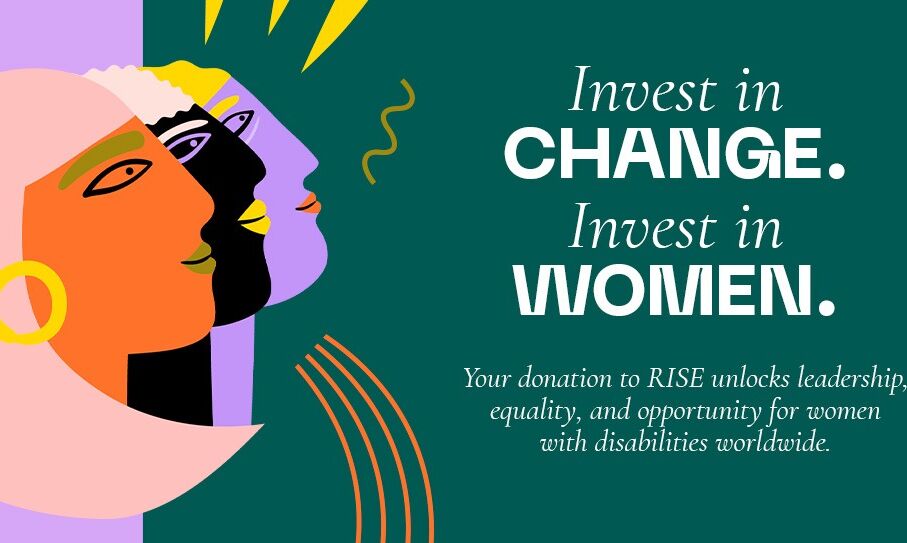
On this 3 December, we invite you to discover and support RISE: Resilience. Inclusion. Solidarity. Empowerment, our global campaign to fund the AHADI Leadership impact programme ahead of the launch of the Social Impact Contract.
RISE was born from a simple conviction: we are not a vulnerable group to be “helped,” but a global force for transformation. As Ismaëlle Haddouzi, participant in the France pilot, affirms: “The leadership of women with disabilities is not an exception; it is one of the most powerful levers for transforming our societies sustainably.” And Veronica Ngum Ndi (Cameroon) adds: “Adopting disability-inclusive societies is the foundation of true social progress, where every voice shapes justice and dignity. Through the AHADI Leadership Program and the RISE campaign, women with disabilities become a global force for transformation.”
In a world searching for justice, social cohesion and democratic stability, investing in the leadership of women with disabilities is not charity, it is a strategy for the future, fully aligned with this year’s international theme.
A Generation Rising: 1,000 Women by 2030, 20,000 Future Leaders
Today, nearly 90 women from 20 African and European countries are participating in the AHADI Leadership pilot phase, whose impact evaluation is preparing its global deployment in 2026. In less than one year, this phase has allowed us to test our methodology, identify barriers, and confirm strong demand for a structured leadership journey.
Women with disabilities are not seeking assistance. They are shaping a movement. As Alex (South Africa) puts it: “We are not seeking to be supported. We want to be recognized.”
Our horizon is clear: 1,000 women leaders equipped by 2030, 20,000 emerging leaders connected in a global community, ready to transform their organizations, their communities, their countries.
This is a shift in scale. This is a shift in paradigm.
In Doha: Carrying the Voices of Women Who Transform the World
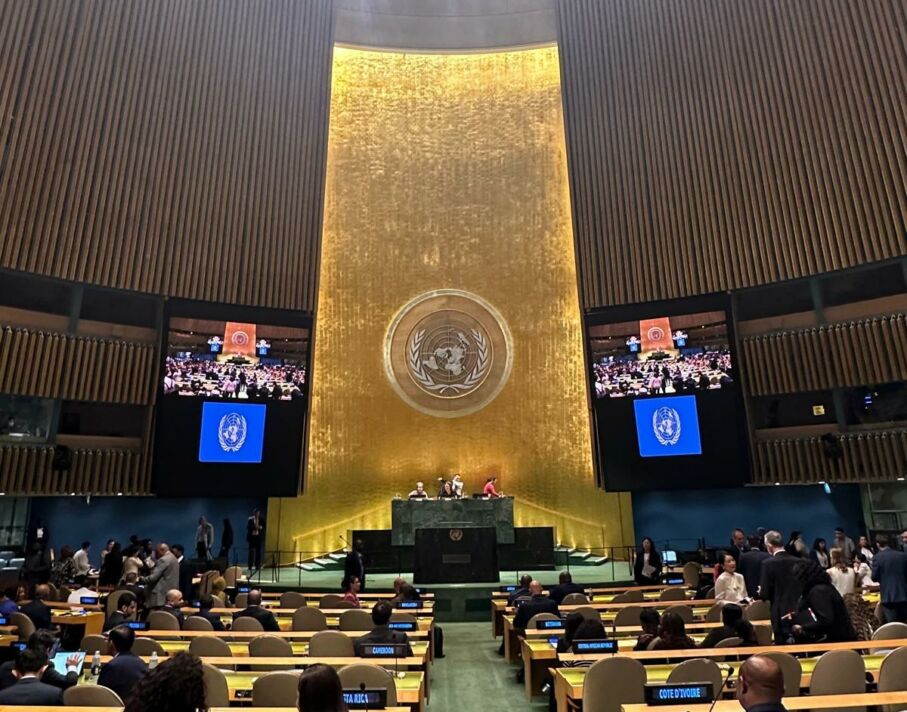
At the UN’s 2nd World Summit for Social Development in Doha, we carried a simple truth: No social transformation will be possible without sustainable structural financing for the leadership of women with disabilities. Current models remain fragmented, technocratic, and blind to the intersection of gender and disability.
RISE proposes an innovative economic framework based on social co-investment, democratization of Social Impact Contracts, sustainable financing for leadership, action research and inclusive decent work.
A Collective Call for 3 December
On this International Day, we call on governments, companies, foundations, institutions and the media to change the paradigm. Do not speak about women with disabilities. Listen to them. Invite them to decide.
Give them the means to transform.
The leadership of women with disabilities is not an “extra” form of equality. It is an essential lever of global social progress, exactly what the international community is calling for this year.
Leadership is an act of dignity. And dignity cannot wait.
I write these words from Brussels, the political heart of Europe where human rights, public policies and democratic trajectories are shaped. It is here, yesterday, that we presented the AHADI 2030 Observatory and officially launched the global RISE campaign. For several days, 450 digital screens across Brussels, Antwerp, Liège and Charleroi will carry a simple and determined message: investing in the leadership of women with disabilities is not an act of charity, but a choice of civilization. A choice for progress. A choice for dignity.
And it is here, at the centre of European decision-making, that we reaffirm this truth:
the world will not move forward without us.
Signatories
Deza Nguembock, Founder & President, AHADI Foundation
and the women leaders of the AHADI Leadership Programme (Africa – Europe)